

Zijderlaan
Data-Driven Work in Transportation and Logistics: From Reports to Better Insights.
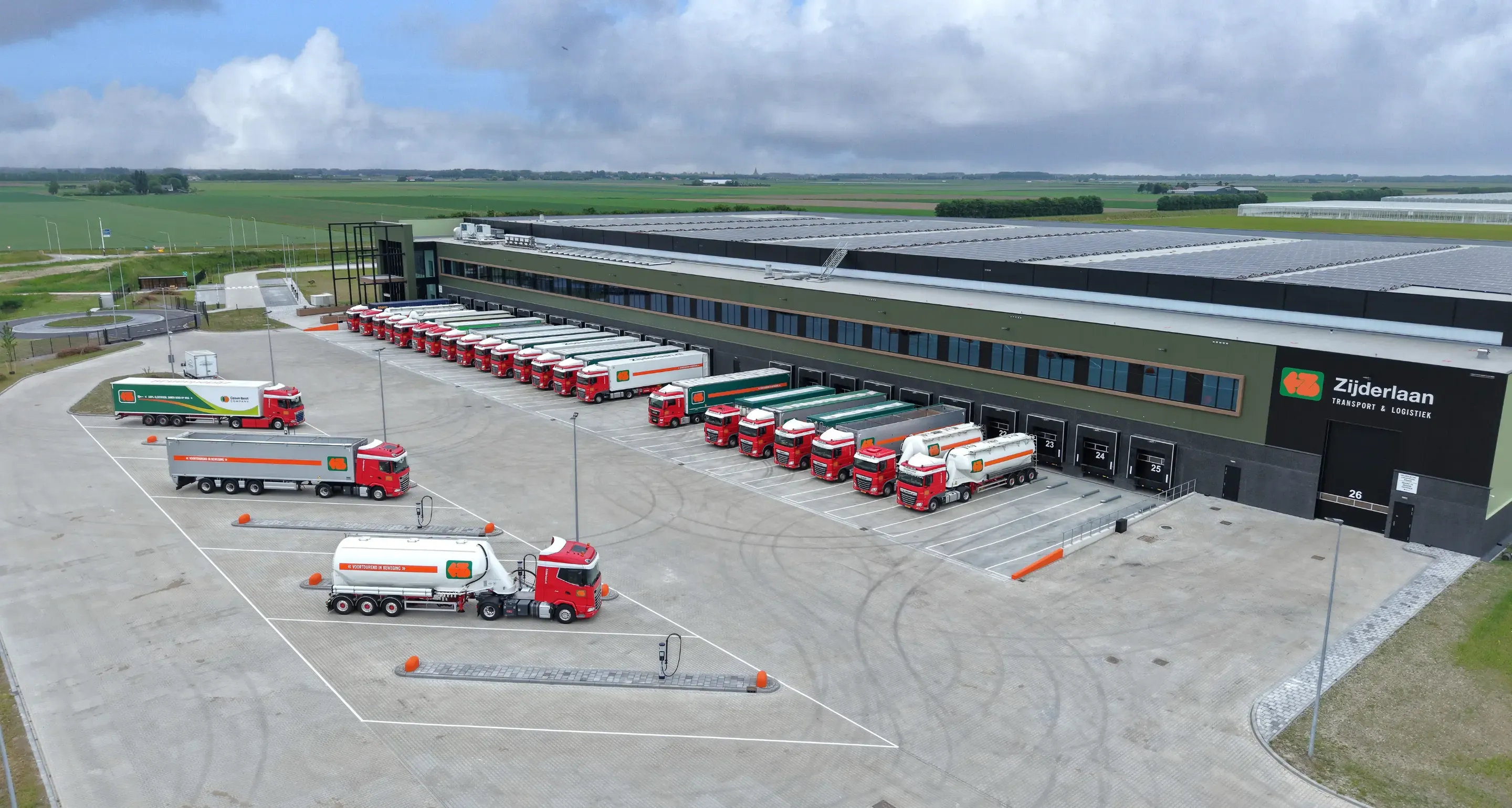
Zijderlaan is a logistics service provider that has been active in transportation, warehousing, and supply chain management for nearly 90 years. It is a family-owned business that has been led by the third generation since 2022. With over 330 employees and a fleet of 250 vehicles, Zijderlaan transports bulk, loose cargo, general cargo, containers, and tankers daily throughout the Benelux, France, and Germany. In 2025, the company opened a new distribution center in Dinteloord, in addition to its existing warehouses in Stolwijk, Gouda, and Puttershoek. Together, this brings the total covered storage space to over 70,000 square meters. The company’s motto perfectly captures its mindset: constantly on the move.
For this customer case study, we spoke with Sjoerd Bosma, Chief Operating Officer at Zijderlaan. Sjoerd has served as Chief Operating Officer since April 2025. Prior to that, he worked as a Supply Chain Consultant at Zijderlaan for several years, so he knows the company inside and out.
How Zijderlaan and Referit Found Each Other
Veldwerk had set up a data warehouse and BI environment for Zijderlaan, complete with reports and dashboards. It was therefore a logical step to transfer this work to Referit. Both companies are part of the Futureproof Group, and Referit specializes in data and application integration, data warehouses, and reporting.
Zijderlaan and Referit have now been working together for over a year. During that time, Yannick Paalvast, a consultant at Referit, has been working on-site on a regular basis. This allowed him to get to know the company well and to apply his technical expertise to Zijderlaan’s day-to-day operations.
The goal: to increasingly base decisions on data
At one point, Zijderlaan made a clear decision.
The company wanted to take the next step toward greater professionalism by basing management decisions more heavily on data and performance indicators. The first step in this process is gaining insight. And insight begins with a clear picture of the application landscape: which applications are in use, and where is each type of data located?
Because Referit took over an existing data warehouse, the focus was on managing, expanding, and making the reports more transparent. At Zijderlaan’s request, those reports were expanded step by step.
The Impact: From Data to Decisions
The greatest benefit of the data warehouse and the reports is insight. And based on that insight, Zijderlaan can make better-informed decisions. The board and management now have access to financial and operational figures they can use to steer the company. One of the most important sources is the TMS—the transport management system—combined with data from the trucks. Together with the scheduling system and other internal applications, this generates a wealth of useful data. For example, it provides insight into a truck’s operational performance, as Zijderlaan aims to keep its trucks as fully loaded and as efficient as possible. Other benefits include more efficient route planning and reducing empty runs—the kilometers a truck travels without a load.
The KPIs relevant to Zijderlaan are those of a logistics company that wants to stay on the cutting edge. These include CO2 emissions and sustainability reports, as well as variable transportation costs, vehicle load factors, and delivery reliability to customers. Each of these figures only becomes meaningful if they are accurate and available at the right time.
Warehousing, along with transportation, is a key component of Zijderlaan’s logistics services. A question that sounds simple but isn’t: How full is a warehouse, really? The data is available, including from the WMS, the warehouse management system. But do you calculate occupancy in pallets or in square meters? And how do you handle all the variations involved? The context is dynamic, but gaining a clear and unambiguous understanding of this is one of the steps we’ll be taking in the near future.
As Zijderlaan continues to grow, new requirements are emerging regarding the design and scalability of the data warehouse. That is why Zijderlaan and Referit are working together to determine how the foundation can be further strengthened in the future.
A Brief Overview of the Technology
Data is transferred from the various applications to the data warehouse using ETL. Along the way, Referit checks the quality of the sources and cleans the data where necessary. To ensure accurate KPI calculations, Referit adds data enrichment steps. This transforms raw, factual data into understandable information that can actually be used to guide decision-making. The reports themselves are built in Power BI.
In numbers: there are 6 data integrations, divided into approximately 19 pipelines, and more than 15 different reports for financial and operational decisions.
The partnership between Zijderlaan and Referit
Sjoerd is clear about the technical side of things. He believes 100 percent in Referit’s expertise and has complete confidence that the technical aspects are in good hands. What he also appreciates is that Yannick is taking on the role of business consultant that Sjoerd used to fill himself.
“I have complete confidence in Referit’s technical expertise.”
Sjoerd Bosma, Chief Operating Officer at Zijderlaan
The Next Step: From Reports to Processes
The reports and insights are becoming increasingly sophisticated as more data becomes available from the applications. For Sjoerd, this is a sign that it’s time to shift the focus. No longer just reporting from the back end, but starting at the front end: clearly defining the key KPIs for effective business operations and taking the data warehouse itself to the next level.
For Referit and Zijderlaan, this marks an exciting next phase—moving from isolated reports to a solid foundation on which the company can continue to build in the coming years. They’re constantly evolving, including in the area of data.